The importance of prebiotics in agriculture

Es un hecho que cada vez damos más valor a los microorganismos en casi todos nuestros aspectos de la vida. Si ya conocemos su papel de implicación en la microbiota humana, poco a poco vamos descubriendo su esencial trabajo en la restauración y conservación de suelos agrícolas. Por ello, en el blog de hoy vamos a hablar de la importancia de los prebióticos en la agricultura.Seguir leyendo

How to optimize irrigation with the use of surfactants

How to optimize irrigation with the use of surfactants

Current problems of water quality and lack of water in agriculture

There are several causes that affect water scarcity such as climate change, contamination of water resources, population growth or water stress, among others. So, in today's blog we talk about how to optimize irrigation with the use of surfactants.

Farmers in southern Spain are uncertain about the amount of irrigation water they will have available for each season. Thus, the main problem facing irrigation management is water scarcity . This means that farmers are unable to organize their crop cycle and meet market demand.

Currently, agriculture is subject to the availability of water, both in terms of quality and quantity. Therefore, it is interesting to apply strategies to increase the efficiency and availability of water, highlighting the use of surfactant as an optimal solution to the present problems.

Soils are characterized as hydrophobic and this is a limitation in the development of the crop because water penetration decreases, as well as the supply of nutrients to the root system. This penetration is limited by the surface tension of the water. Therefore, the use of surfactants reduces or eliminates this tension and water penetrates better to the surface.

Use of surfactants in agriculture

Surfactants are known as adjuvants that reduce the strength of the surface tension of water by decreasing the energy of the bonds between water molecules, thereby increasing root system and nutrient uptake.

In agriculture, the application of surfactants has been gaining relevance due to their coadjuvant properties. Their main function is to increase the contact surface between the solid-liquid phases through wetting.

In general, we can divide between surfactants for foliar application (they modify the relationship between leaf surfaces and spray droplets) and surfactants for irrigation application (they improve soil penetration).

All of them will improve dispersion, emulsification, spreading, adhesion and wetting by modifying the behavior of liquids on the surface.

Surfactants have several advantages, the most important being:

  • Valid for all irrigation systems.
  • Increases root surface area.
  • Increases the wetted surface with the same amount of water initially applied.
  • Maximizes nutrient availability and assimilation.
  • Decreases the use and doses of phytosanitary products.
  • Compatible and stable when mixed with other products.
  • Improves soil oxygenation, favoring the development of microorganisms.
  • Reduction of waterlogging and root asphyxia.
  • Helps water efficiency and consumption by reducing losses due to percolation, runoff, etc.

In general, it favors cultivation and increases production.

There are different surfactant raw materials and none of them can be considered as ideal, for each moment of the crop it will be necessary to apply one according to the climatic conditions at that moment and also to what is to be controlled.


???? Surf-Max, surfactant technology for lateral water movement

???? agran.com/huma-gro/surf-max/

  • It has surfactant technology based on the properties of lateral water movement, which is very interesting when we seek to optimize fertigation and better use of nutrients. to optimize fertigation and the best use of nutrients. 
  • This lateral mobility also offers advantages when working with low quality water, either because of its sodium or chlorine content. With such lateral movement, a greater displacement of salts out of the wet bulb is achieved, reducing the salt load near the main roots.
  • It offers competitive advantages when applied by foliar application. At low doses, it improves phytosanitary and nutritional treatments by foliar application, reducing drop size and increasing its penetration into the epidermis.

The versatility of the product allows it to be mixed directly in the fertilizer tanks, so that we can dose so that each drop of nutrient irrigation contains a sufficient part of surfactant technology. This option reduces handling operations and eliminates the need for spot applications (e.g., monthly), which lose efficiency and reduce (but do not avoid) the usual problems derived from soils with low water mobility and very hydrophobic soils.

How Surf-Max works

Surf-Max acts directly on the irrigation water improving its transport and movement in the soil . As a result, it is able to cover a larger area both vertically and horizontally, enveloping all the roots. In addition, by eliminating the hydrophobicity of water in the soil, it circulates freely through the wet bulb of the plant, increasing its surface area and allowing a greater assimilation of water with nutrients.

These properties given to water and its movement in the soil can allow savings of up to 20-25% with the same productive result.

It has several benefits:

  • Eliminates soil compaction, waterlogging and poor water cover.
  • Improves the drainage characteristics of a soil, increasing the surface area of the wet bulb and covering a greater volume of roots.
  • Reduces water expenditure to obtain the same water yield for the plant.
  • Increases nutrient absorption, reducing volatility, leaching and yield loss.
  • Wetting and dispersing agent suitable for foliar treatments of nutrients and phytosanitary products.


+ info at:
???? https://www.agran.es/

Follow us on:

???? Facebook: https://www.facebook.com/agranhumagro

???? Instagram: https://www.instagram.com/agranliquidtechnology/

???? Linkedin: https://www.linkedin.com/company/37223287

The importance of boron and molybdenum

importance of boron and molybdenum in agriculture

Micronutrients play an essential role in plant nutrition. Although their application is quite small in terms of volume compared to other nutrients (nitrogen, phosphorus or potassium, for example), their deficiency causes equally significant production losses. In this article we analyze the importance of boron and molybdenum in agriculture. Although these 2 microelements have always been attributed an important value in flowering and pollination, their role goes far beyond this phenological phase.

The importance of boron in plant nutrition

Boron is practically one of the most important microelements for plants. It is related to the construction of the cell wall and the management of photoassimilates (sugars and carbohydrates) produced by the crop.

Its application is also associated with calcium treatments, since both elements have direct importance on the synthesis of cell walls. As a vulgar concept, we can say that one element is the brick and the other the cement that builds the structure of the plant.

Functions of boron in the plant

Boron has several functions in the plant, among which the most important are:

  • Stimulates flower production and retention, pollen tube germination and elongation, and fruit and seed development.
  • It has activity on hormone production and regulation (as does zinc). Its absence causes the enzyme IAA-oxidase to reduce auxin functionality, thus preventing auxins from being found in sufficient concentrations in the flower to produce a positive stimulus.
  • Boron is involved in the production of proteins and the mobility of sugars and carbohydrates.
  • It participates in the formation of the cell wall and its stability.
  • Helps metabolize nitrogen.

The importance of molybdenum in plant nutrition

Molybdenum is another essential micronutrient for plants. Its differential value lies in the high mobility it has inside the plant, contrary to the rest of microelements.

Its activity is practically silent inside the plant, but really essential. While boron has a direct effect on flowering and sugar production, molybdenum acts covering basic functions, somewhat unknown to many people. For example, it is an integral part of redox reactions and enzymatic activity, such as the proper assimilation of nitrogen in the form of nitrate (nitrate reductase).

Molybdenum functions in the plant

  • It is involved in nitrogen fixation.
  •  Molybdenum is a key component in two enzymes that convert nitrate to nitrite and then to ammonia. Its absence prevents the correct transformation of nitrogen into amino acids.
  • It offers synergies with iron assimilation.
  • It favors the transformation of phosphorus within the plant.

When is it recommended to apply boron and molybdenum to our crops?

The optimal nutrition of our crops is the one that provides all the elements continuously, anticipating the needs that the crop may have. However, the reality is that we cannot always do it or there are specific stages where greater quantities of these 2 elements are required.

It is common to find products containing a mixture of both, always with boron predominating because plants require it in higher concentration. Both boron and molybdenum have direct activity on pollination and fertilization of flowers, so the plant must have sufficient levels of these two microelements before flowering occurs.

While flowering in most tree crops is determined by the reserves of the previous season, at the current stage, with the addition of boron and molybdenum, the viability of these flowers is determined. Therefore, this contribution will allow the production of sufficient quality pollen and a greater number of fruits produced.

In deciduous crops, boron and molybdenum applications, among other elements, increase the production of proteins and sugars and their transport to the reserve organs, in this case the roots. This increases the crop's energy reserve for a successful future season.

???? Boramol: boro y molibdeno con inductores de auxinas y citoquininas.

???? https://agran.es/boramol/

The importance of boron and molybdenum in agriculture is so fundamental that Agran has designed Boramol, a product created to contain an ideal ratio of boron and molybdenum in suspension, which allows for improved mixtures with phytosanitary and other nutritional products.

However, the added value of Boramol is that it contains auxin and cytokinin inducers of natural origin, which allows it to act doubly on flowering and fruit pollination.

When boron is bound to these auxin promoters, pollen quality increases exponentially, increasing the availability of indoleacetic acid and boron to prevent oxidation of indoleacetic acid.

Advantages of Boramol:
  • Optimal ratio of boron and molybdenum to favor pollen activity and all processes related to fertilization.
  • It contains natural phytohormone inducers that work together with microelements to cover vital physiological stages.
  • Increases the mobility of sugars from the producing sources (leaves and stems) to the sinks (flowers, fruits and roots) in a concentrated formula that quickly corrects deficiencies of these two micronutrients.

This product can be applied foliar and in fertigation for all types of crops.


+ info at:
???? https://www.agran.es/

Follow us on:

???? Facebook: https://www.facebook.com/agranhumagro

???? Instagram: https://www.instagram.com/agranliquidtechnology/

???? Linkedin: https://www.linkedin.com/company/37223287


Why sap analysis helps in crops

sap analysis for crops

As the years go by, new technological ways to improve production and obtain a better control of fertigation and plant nutrition of our crops are appearing. One strategy that our company, Agran Liquid Technology, has been using for more than 6 years is the measurement of petiole extract using sap ionometers. Therefore, today we want to tell you why sap analysis helps crops.

This system allows to know almost instantly the nutrients concentrated in the cell juice of the extracted sap. This provides more relevant information to define a strategy for the crop.

What is sap analysis measurement?

Sap analysis or petiole sap extraction is a simple and practical technique to obtain, directly from the plant and in a few minutes. Relevant information is obtained about nutrients accumulated in the cell juice or sap of any plant.

Under this technique, values collected in ppm or mg/L of the following nutrients can be obtained:

  • Nitrogen in the form of nitrate (NO3-), measured in mg/L
  • Potassium (K2O) measured in mg/L
  • Calcium (Ca2+) measured in mg/L
  • Sodium (Na+) measured in mg/L
  • pH
  • Conductivity (EC) measured in mS/cm
  • º Brix (%) or concentration of sugars

The difference between this diagnostic method and laboratory foliar analysis is that it only allows the reading of soluble (mobile) nutrients, instead of all types of nutrient status, including insoluble forms. Therefore, it is very interesting because its reading resembles, comparatively, a real blood analysis, but in vegetables, obtainingsensitive and important information for decision making.

Advantages of the sap analysis tool

Why does sap analysis help in crops? Let's learn about its advantages:

  • Get to know in situ the nutrient pantry of the crop.
  • Increases information prior to foliar treatments or preparation of fertilizer tanks for fertigation.
  • It anticipates possible nutritional deficiencies or mismatches in fertilization.

What is the relationship between nutrients?

Any crop maintains a constant balance between cations (positively charged nutrients) and anions (negatively charged nutrients). The imbalance of one nutrient can affect the rest and, as a result, production losses, nutritional deficiencies or imbalances can occur. For example, potassium (K+) competes directly with the concentration of calcium (Ca2+), sodium (Na+) or magnesium (Mg2+), so an excess of this nutrient negatively affects the assimilation of the rest.

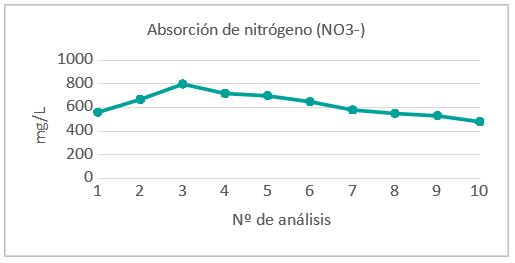
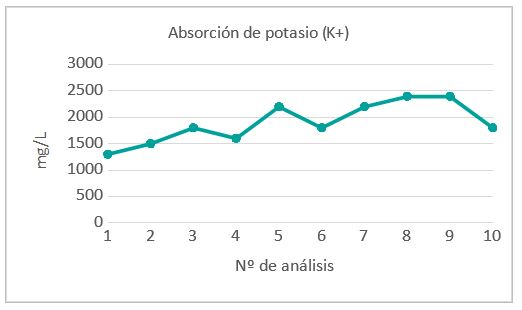
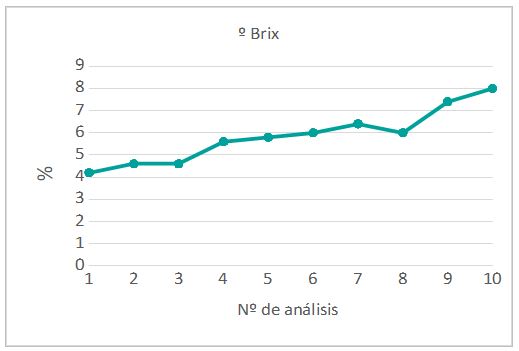
Depending on the phenological or growth stage of the crop, the concentration of nutrients will vary. At the beginning of the crop (sprouting to fruit production), it is usual to have higher accumulated reserves of nitrogen and lower accumulation of potassium. However, as the stock of elements that absorb photoassimilates (carbon and sugars) increases, the tendency of nitrogen is to decrease and potassium to increase.

This nitrogen is not necessarily reduced by a lower input in fertigation, but also by an increased activity of the plant. This will rapidly transform this element into carbon elements: proteins, amino acids and sugars. As a result, the º Brix in sap increases progressively in anticipation of the greater accumulation of these elements in the fruit.

An example of this can be seen in these images:

sap analysis for crops

sap analysis for crops


  • As can be seen, the trend in the sequence of analyses has been a progressive decrease in the accumulation of nitrogen (NO3-) and a constant increase in both potassium (K+) and Brix.
  • Each crop, variety and form of cultivation has its own values, so it is necessary to have a solid database to adjust the parameters as much as possible.
  • For all these reasons, Agran's team offers its customers crop monitoring through sap analysis, a very important tool for decision making in any type of crop.

La importancia del aminograma en un aminoácido

Uno de los productos bioestimulantes más utilizados y reconocidos en la agricultura actual son los aminoácidos, de los que podemos encontrar una gran variedad de opciones, concentrados y mezclas. Así pues, conocemos la importancia del aminograma en un aminoácido.

Sin embargo, podemos cometer el error de no profundizar en su composición y centrarnos únicamente en la concentración final. Y, sin embargo, lo que determina el resultado final en la aplicación es la caracterización de su aminograma y la heterogeneidad del mismo.

En este artículo dilucidamos sobre la composición de un aminograma y cómo diferenciar los distintos aminoácidos presentes en el mismo.


Los aminoácidos como fuente energética de carbono y nitrógeno

Los aminoácidos se caracterizan por ser estructuras orgánicas reconocibles por las plantas, de bajo peso molecular y como consecuencia de la desfragmentación de las proteínas, estructuras más complejas y de mayor tamaño.

Este proceso de descomposición de proteínas y péptidos se lleva a cabo por medio de “agentes catalizadores” conocidos como enzimas.

En función de la calidad de la proteína y el proceso enzimático se obtendrá una concentración distinta de todos los aminoácidos esenciales que una planta necesita.

Por tanto, el proceso de formulación y la fuente original de proteína es sumamente importante para obtener un concentrado aminoácido de calidad.


Efectos de los aminoácidos en las plantas

Al conocer la importancia del aminograma en un aminoácido es necesario saber que:

  • Aumenta la absorción de los nutrientes.
  • Estimula la resistencia de las plantas a agentes externos.
  • Alivio de situaciones de estrés.
  • Efecto enraizante.
  • Estimulación de la floración.
  • Mejora del cuajado y calidad de los frutos.
  • Mayor contenido de azúcares en la cosecha.
  • Precocidad.
  • Mejora en el tamaño y la coloración del fruto.

Sin embargo, dependiendo de la concentración y la heterogeneidad del aminograma, se podrá conseguir un efecto u otro, ya que no todos son absolutamente versátiles ni funcionan de la misma manera.

De ahí la importancia de saber reconocer la diferenciación de un aminoácido frente a otro según su uso.


La función específica de cada aminoácido

Ác. Aspártido > Potencia el efecto del resto de aminoácidos

Ác Glutámico > Brotación y formación de hojas, floración y cuajado

Alanina > Aumenta la concentración de clorofila en la planta

Arginina > Actividad enraizante e inductora de la fitohormona auxina

Fenilalanina > Calidad de frutos, aumento de polifenoles y proteínas

Glicina > Actividad quelante, brotación y floración

Histidina > Aumenta la resistencia de la planta frente al estrés

Isoleucina > Regulador metabólico

Cistina > Aumenta la resistencia de la planta frente al estrés

Leucina > Actividad predominante sobre floración y cuajado de frutos

Lisina > Aumenta la absorción nitrógeno, producción de clorofila y frente a sequía.

Metionina > Precursor de etileno, acción maduradora y efecto enraizante

Prolina > Favorece la salida de estrés

Serina > Potencia el efecto del resto de aminoácidos

Tirosina > Acción antiestrés y balance energético

Valina > Favorece la germinación semillas y aumenta la resistencia de la planta

Hidroxiprolina > Mejora el equilibrio hídrico, la producción de polen y la resistencia

Triptófano > Producción de polifenoles y resistencia de la planta (alcaloides)


???? Agran Amino 10: heterogeneidad y composición como valor añadido

???? https://agran.es/agran-amino/

En base a lo comentado, hemos creado una fuente de aminoácidos versátil y completa a través del producto Agran Amino 10, basado en hidrólisis enzimática de origen animal.

Por su concentración, predomina la concentración de Ácido glutámico, Glicina, Prolina y Serina, por lo que fomenta principalmente la brotación y formación de masa vegetal, la floración, la salida del estrés y la actividad del resto de aminoácidos.

En base a su composición, las principales recomendaciones de este producto se basan en aplicaciones a inicio de actividad vegetativa, en floración y en momentos de estrés, especialmente por calor, retraso en el crecimiento o en momento críticos como floración y cuajado de frutos.

Su origen animal permite conseguir una relación ideal de aminoácidos libres junto con cadenas cortas y largas de péptidos, así como una gran concentración de nitrógeno y materia orgánica.

Cuenta con certificación ecológica y se recomienda su aplicación tanto por vía foliar (200-300 cc/100 L de agua ) como en fertirrigación (3-4 L/ha).


+ info at:
???? https://www.agran.es/

Follow us on:

???? Facebook: https://www.facebook.com/agranhumagro

???? Instagram: https://www.instagram.com/agranliquidtechnology/

???? Linkedin: https://www.linkedin.com/company/37223287

Color y azúcares en frutales de hueso

La Región de Murcia y otras zonas en Andalucía albergan una de las mayores superficies de frutales de hueso de recolección temprana, donde la mayor parte se recolecta entre los meses de mayo y junio. En este artículo analizamos cómo obtener color y azúcares en frutales de hueso para conseguir mejores resultados.

En esta época, es vital dar los últimos empujes en la fertirrigación para conseguir el calibre, color y contenido en azúcares suficiente para conseguir una fruta de primera calidad. Para esta fase, el potasio se convierte en el nutriente por excelencia para el cultivo, aunque las aplicaciones equilibradas de calcio y fósforo junto con este elemento han demostrado mejores resultados.

Nutrición para la etapa de maduración en frutales de hueso

Las estrategias de fertilización en las etapas finales de maduración, previas a la cosecha, suelen dar la mayor importancia a la fertilización potásica, un elemento vinculado en el transporte de azúcares, la regulación hídrica y el aumento del peso específico en los frutos. Sin embargo, si este nutriente es apoyado junto a otros, los resultados finales pueden ser más eficientes.

Sin embargo, si este nutriente es apoyado junto a otros, los resultados finales pueden ser más eficientes.

Importancia del fósforo en la maduración

El fósforo es un elemento que se recomienda aplicar de forma continua durante todo el periodo productivo. Sin embargo, en las fases finales de producción vuelve a adquirir importancia dado su papel principal como fabricante de compuestos azucarados y aporte energético.

Las estrategias que aúnan el aporte de potasio junto con el fósforo han demostrado ser muy efectivas en la adquisición del calibre final. Además,  ayudan al aumento de contenido en polifenoles y antioxidantes (elementos involucrados en el color y olor característico de la fruta de hueso) y contenido en azúcares (º Brix).

El fósforo incrementa el color del fruto por impulsar el contenido de antocianina. Además, reduce las fisiopatías comunes en el transporte y almacenaje de fruta.

Función del potasio en las etapas finales de producción

El potasio está involucrado en la mejora de la calidad del fruto. Su empleo de forma continua durante el aumento de calibre de los frutos favorece el aumento de azúcares y sólidos totales (SST).

Sin embargo, hay que tener en cuenta que el exceso de potasio dificulta la asimilación de otros elementos de gran importancia en la calidad de la fruta, como el calcio o el magnesio.

Calcio

El calcio es un macronutriente secundario muy vinculado a la calidad de los frutos y es que favorece la división celular y la calidad de la piel.  Por ello se recomienda una nutrición equilibrada durante todas las fases de producción para conseguir una vida postcosecha de calidad.

Productos recomendados en la maduración de frutas de hueso

Yield-Max: esta solución rica en potasio y boro, está ideada para iniciar los procesos de maduración final en la fruta, movilizando los carbohidratos y azúcares acumulados en hojas, tallos y raíces hacia las partes sumidero como son los frutos.

Su acción basada en la Tecnología Micro CarbonoTM promueve la síntesis natural en ácido abscísico, una fitohormona involucrada en los procesos de maduración, adquisición de color, aroma y º Brix, pero sin arrastrar los problemas habituales de postcosecha del famoso etileno.

Celeris: fuente de calcio sin nitrógeno que contiene boro, ideal para impulsar la movilización final de azúcares a los frutos. Contiene promotores enzimáticos de producción de carbohidratos y su fórmula facilita la penetración en los frutos. Esto mejora la calidad de la piel y la vida post-cosecha.

Fructus: fuente altamente concentrada de fósforo (23% p/p) y potasio (26,5%) en forma líquida, lo cual facilita las aplicaciones foliares. La sinergia entre estos 2 nutrientes permite conseguir el calibre final deseado en los frutos e iniciar los procesos de maduración, color y acumulación final de azúcares.


???? ➡️ Movilizador de los recursos fotosintéticos (Yield-Max): favorecer los procesos de maduración natural previos a la recolección.

???? https://agran.es/huma-gro/yield-max/

???? ➡️ Calcio (Celeris): estimula los procesos de división celular ligados al uso de calcio, fomentando el equilibrio fisiológico de la planta durante todo su desarrollo.

???? https://agran.es/phycotec/celeris


+ info at:
???? https://www.agran.es/

Follow us on:

???? Facebook: https://www.facebook.com/agranhumagro

???? Instagram: https://www.instagram.com/agranliquidtechnology/

???? Linkedin: https://www.linkedin.com/company/37223287

 

The 3 keys to industrial tomato nutrition

Industrial tomato is the summer crop par excellence in many Spanish areas, where large productions are achieved for industrial consumption (juices, tomato concentrates, fried tomato, etc.).

Although it comes from the same species, industrial tomato varieties behave quite differently from traditional tomatoes, so both management and fertigation undergo changes.

In this article we tell you what are the 3 keys to industrial tomato nutrition.

Industrial tomato cultivation

The industrial tomato is grown in short cycle from spring onwards, when the cold night temperatures are gone and gives way to many hours of light. To obtain good yields, it is very important the variety chosen, the climate, soil quality and fertigation, where irrigation management is essential.

In terms of cultivation, the industrial tomato is not a very demanding species in terms of soil, being frequently cultivated in sandy environments, with very good drainage. In addition, it is preferable to have slightly acid environments, for the best use of nutrients.

The success of fertigation is to provide all the nutrients on demand to achieve continuous flowering throughout the season, homogeneous fruit fattening and the acquisition of sufficient sugars and º Brix to obtain a high productive quality.

1. Importance of fertilizer scheduling in industrial tomatoes

The first of the 3 keys to industrial tomato nutrition is to program the supply of fertilizers and their distribution throughout the industrial tomato season is extremely important. First of all, if we do not know the nutrient reserve in the soil, it is advisable to carry out an analysis. In this way we will correct any nutrient deficiency before planting by means of background fertilization.

Excess nutrients are also detrimental. A very abundant supply of nitrogen increases the development of the plant and reduces the load of flowers and fruits, increasing the distance between bunches.

Within background fertilization, the main element to be provided to the soil is phosphorus, which is responsible for a better installation of the plant in the transplant, rooting activity and energy supply in the early stages of development. This element is usually provided either in the background (suspensions or granular fertilizers) or by means of the so-called "starter" once transplanting has been completed.

2. Mulch fertilization

Once the industrial tomato is transplanted in soil, fertigation plays a very important role.

In the early stages of development, before the appearance of the first flowers, a vigorous development of the plant is sought that will act as a future support for the fruits. Therefore, fertigation with priority for nitrogen and phosphorus is important.

However, when the productive stage begins and the first flowers start to fertilize, the supply of nitrogen gradually decreases along with phosphorus, increasing the supply of potassium, calcium or magnesium.

At this stage, it is common to work with an NPK ratio of 1-0.4-2, also providing the secondary macronutrients calcium and magnesium.

Continuing with the fruit fattening and color change stage, nitrogen and phosphorus supply remains constant, but potassium supply continues to increase, thus stimulating the accumulation of reserves, sugars and nutrients in the fruit.

3. Developmental stimulants by stages

The last of the 3 keys to industrial tomato nutrition, together with the aforementioned fertigation, it is usually common to provide additional biostimulants and nutrient correctors. This contributes to cover all the needs of the crop and to improve the final production.

Rooting and soil activators

The application of rooting and rhizosphere stimulants (microbiology and moisture retainers) is recommended. Products such as

  • Augeus (Ecklonia Maxima): high auxin ratio to favor the formation of absorbent hairs up to 40% more than the control.
  • Renovo (humic extract): rhizosphere activator to increase the activity of beneficial microbiology.

Flowering and fruit formation enhancers

  • Breakout: bud break, flower and fruit set enhancer, based on Micro CarbonTM Technology.
  • Vitol: cell fattening activator to increase fruit specific weight and pulp filling, with Micro CarbonTM Technology.

Activators of maturation and accumulation of sugars

  • Color: potassium 20% with inducers of maturation and accumulation of sugars.
  • Yield-Max: crop finisher that promotes the translocation of sugars, vitamins and carbohydrates from leaves, stems and roots to fruits.


+ info at:
???? https://www.agran.es/

Follow us on:

???? Facebook: https://www.facebook.com/agranhumagro

???? Instagram: https://www.instagram.com/agranliquidtechnology/

???? Linkedin: https://www.linkedin.com/company/37223287


The importance of nutrition in olive blossoming

The olive tree is a crop of great importance throughout the Mediterranean basin and the Spanish territory. Being Spain one of the main producing countries, nowadays we are at the forefront of cultivation techniques, varieties and nutrition of the olive grove. Due to the great importance of this crop, we talk about nutrition in olive flowering.

The intensive olive grove area is becoming increasingly important, with very reduced planting frames and higher production. However, it is also more dependent on the management and cultural techniques used.

Regarding the olive grove and its nutrition, flowering and fruit set is one of the most critical and important phenological stages of the whole cycle, significantly influencing the productivity of the olive tree, flowering and fruit set. When the flower bud emerges, flowering treatments are initiated to provide the nutritional resources that the olive grove needs at this stage.

This nutritional balance of the olive grove, which begins with the fruit filling of the previous season, leads to a significant increase in the number of fruit set. In this regard, although the olive grove produces a very high number of flowers, only between 1 and 2% of them reach fruit set.

Nutritional needs of the olive grove in bloom

The availability of nutrients in the olive orchard can condition the number of viable flowers and fruit at the fruit set stage. Flowers are consumers of sugars and carbohydrates, so it is important to haveprevious reserves in the tree to achieve remarkable productive results. Therefore, we say that the relationships between mineral nutrition of the olive tree, flowering and productivity are complex and depend on environmental factors such as water availability and winter cold.

In addition, a sustainable and balanced fertilization program is vital to achieve proper flowering and fruit set. This results in optimal yields once the oil production process (lipogenesis) is initiated.

Therefore, an adequate and available nutrition will favor the fruit formation during its development, mainly increasing the olive yield. Thus, the 3 main nutrients in olive orchard nutrition are nitrogen, phosphorus and potassium. Both nitrogen and phosphorus are important for the formation of plant mass and for correct root development, especially in young seedlings. On the other hand, potassium is important from the beginning of fruit set, fundamental to achieve adequate water mobility, reduce summer stress and favor fat accumulation.

Among the micronutrients, boron has a special role in olive trees, especially during the fruiting period. This element is important in the formation of pollen for good fertilization, and is a fundamental nutrient in the development and maturation of pollen. In addition, it accumulates mainly in the reproductive tissues and to a lesser extent in the vegetative organs. It also influencesprotein synthesis and phosphorus assimilation.

During the flowering season, the nutritional needs for boron and phosphorus increase and with an adequate supply of these nutrients, a more uniform flowering and a higher percentage of viable flowers are achieved.

Recommended nutrients in this phase

Together with mulch or fertigation nutrition, olive orchards are a crop that favors foliar applications of nutrients and biostimulants. Flowering, being a sensitive and critical phase, is a very favorable time for this type of treatment. In addition to the preventive products for repyllication, stimulants for rapid energy supply or phytohormones that regulate the flowering and cellular differentiation processes are usually applied.

Amino acids: Amino acids in pre-flowering and flowering provide an energetic stimulus necessary to give viability to flowers and boost the fruit set process. However, they are not very important in the physiological processes related to phytohormones. It is important that the amino acid contains a complete aminogram to satisfy the demand for each of them. This is because there are special formulations adapted to olive flowering.

Seaweed extracts: Seaweed extracts provide nutrients that are not present in the fertilizers commonly used, such as different oligosaccharides, enzymes, vitamins and phytohormones. In particular, the flowering and fruit set of the olive grove is favored when these types of products are used, as they manage to balance the physiology of the olive grove to increase its receptivity to flower fertilization. One of the most recommended seaweed extracts for this phase, especially for its auxin and cytokinin ratio, is Ecklonia Maxima, from the South African coasts.


???? ➡️ Amino acids (Agran Amino): contains natural enzymatic hydrolysis and is rich in organic nitrogen.

???? https://agran.es/phycotec/agran-amino/ 

???? ➡️ Algae extract (Augeo): contains enzymes that delay the oxidation of phytohormones and increase their biological activity.

???? https://agran.es/phycotec/augeo/


+ info at:
???? https://www.agran.es/

Follow us on:

???? Facebook: https://www.facebook.com/agranhumagro

???? Instagram: https://www.instagram.com/agranliquidtechnology/

???? Linkedin: https://www.linkedin.com/company/37223287


Keys to budbreak and flowering of the vineyard

The vineyard is part of the history of Spain, achieving a very high quality with denomination of origin and very good valuation worldwide. Climatic factors, soil type and management of our farmers make the Spanish wine one of the most desired.

The spring months of April and May awaken the vines, where buds and stems begin to emerge that will dress the vines prior to flowering. This stage is quite delicate from the climatological point of view, since late frosts can cause the loss of almost the entire future harvest.

At the nutritional level, this is a very sensitive stage, where it is necessary to supply nutrients lost in the previous harvest so that the crop can reach flowering and bunch set with sufficient energy.

In this article we give you some keys for the budding and flowering of the vine to meet the energy demand.

The most important nutrients during budbreak and flowering of vines

From budbreak onwards, the consumption of the main nutrients consumed by the vine shoots up, especially phosphorus content. Just between the period when the buds emerge and the first bunches appear, the consumption of this nutrient reaches its maximum, so it is important to have a soil fertilization (liquid or solid) rich in phosphorus.

Both nitrogen and phosphorus maintain a progressively increasing consumption, reaching the maximum demand that occurs during the first stages of fruit fattening.

However, in order to generate a good initial bud break in the vineyard, the homework must have been done in the previous season, recovering nitrogen, phosphorus and potassium reserves and ensuring a good supply of microelements (boron, zinc and manganese, in particular) to regulate the plant's physiology.

  • Nitrogen: the stage of greatest requirement in the vineyard coincides with the formation of shoots, flowering and initial fruit fattening, increasing its need progressively.
  • Phosphorus: the absorption of this element is at its maximum during sprouting until flowering, with a gradual reduction in its need from fruit set, fattening and veraison onwards.
  • Potassium: the demand for this element increases until the maximum peak that occurs during fruit set and the first stages of fattening. From this point on, and contrary to popular belief, the needs are progressively reduced until the final harvest.
  • Calcium: should be provided constantly throughout the period, especially in the early stages. It has been shown that late applications of calcium prevent the appearance of diseases and increase the aromas in the wine.
  • Magnesium: it is constantly supplied to the crop, being in charge of giving greenness to the crop and promoting the production of sugars.

Stimulants for sprouting and flowering of vines

Another of the keys to sprouting and flowering in the vineyard are stimulants. In addition to having an adequate nutritional base with fertilizers prior to sprouting and root movement, there are biostimulant and corrective products whose use promotes a greater energetic contribution to the crop, favoring greater sprouting and higher quality bunches.

During sprouting and flowering, the application of the following products is recommended:

AUGEO: liquid concentrate of Ecklonia maxima seaweed with a high auxin and cytokinin ratio. Creates a physiological stimulus that promotes sprouting and cell differentiation.

QUELATIO: micronutrients concentrate (Cu, B, Fe, Mn, Mo, Zn) with an optimal ratio for vines in the early stages. It prevents any physiopathology related to the lack of microelements, such as chlorosis.

CELERIS: liquid calcium and boron concentrate with physiological cell division promoters. Calcium and boron promote the creation and mobility of auxins, improving sprouting and flowering processes and increasing crop yield.


???? ➡️ Seaweed extract (Augeo). Provides an ideal phytohormone ratio in auxins and cytokinins to stimulate the production of new roots.

???? https://agran.es/phycotec/augeo/

???? ➡️ Nutrients (Quelatio). Maintains an ideal and stable ratio of micronutrients, exactly what the plant needs to maintain the best balance and behavior of the elements.

???? https://agran.es/phycotec/quelatio/

???? ➡️ Calcium (Celeris). Increases the number of flowers and fruit set, as well as guarantees fruit or leaf fattening and quality, preventing physiopathologies related to calcium deficiency.

???? https://agran.es/phycotec/celeris/


+ info at:
???? https://www.agran.es/

Follow us on:

???? Facebook: https://www.facebook.com/agranhumagro

???? Instagram: https://www.instagram.com/agranliquidtechnology/

???? Linkedin: https://www.linkedin.com/company/37223287


The 4 keys to pistachio flowering and fruit set

Pistachio is a crop of recent incorporation in Spain, especially if we compare it with other fruit and nut varieties. Therefore, every year new and relevant information is obtained to increase the productivity of the crop. A crop where nutrition, pruning and management are essential to achieve high yields. In this article we will give the 4 keys in the flowering and fruit set of pistachio trees to know the main considerations of its flowering and fruit set process.

1. Flowering as a key to high production

This flowering in the pistachio tree occurs gradually and anticipates budding, where the tree is slowly covered with foliage. However, in the case of the pistachio tree it is somewhat more special if we compare it, for example, with the almond tree. This occurs because it has productive female flowers and male flowers because it is a dioecious tree. At this stage, it is important to ensure good pollen quality, and this factor depends a lot on the weather (uncontrollable) and the nutritional situation of the tree (controllable).

Correct pollination of the female flowers will ensure adequate fruit clusters for quality and production at the end of the season. Therefore, being a dioecious tree, tree management is important . Why? With pruning and plant nutrition we achieve an ideal balance of branches and clusters on the tree. This will favor a more receptive flowering for fertilization.


2. Male flowers

In the case of male flowers, they are located mainly in the basal branches of the tree. They are the first to mature as opposed to those located in the upper parts of the tree. These flowers emit pollen continuously for several days, being interesting to ensure trees with good size to achieve a greater distribution of pollen.


3. Female flowers

The female flowers have a totally physically distinct shape from the male flowers. Each flower bud harbors about 150 ovules, being receptive to pollen from the male flower for 3 or 4. Therefore, this period of fertilization can be extended for more than 1 week until the formation of all the fruits takes place. It must be taken into account that each ovule of the female flower is only receptive for 24 hours. The final aim is to form between15 and 20 fruits per bunch. This figure would indicate a high quality of pollination and fruit set.


4. Importance of nutrition in pistachio flowering.

In addition to weather considerations and tree health, it is important to have accumulated reserves from the previous season. Otherwise, the lack of energy in the physiological balance of the tree will damage the number of viable female flowers and the quality of pollen in the case of male flowers. It is therefore advisable to carry out a detailed soil and water study to determine the ideal needs throughout the season. Post-harvest foliar and fertigation treatments can be carried out to recover the levels that have fallen due to the high demand of the fruit.

???? La aplicación de bioestimulantes durante el proceso de floración asegura una mayor calidad del polen y una mayor receptividad a la fecundación de las flores femeninas. Los extractos de algas, como Augeo (Ecklonia Maxima), mejoran la calidad del polen, la longitud del tubo polínico. Además aportan a la planta un balance fitohormonal idóneo entre auxinas y citoquininas para conseguir una floración de calidad y una carga de 15 a 20 frutos por ramillete.


Final considerations on the 4 keys to flowering and fruit set of pistachio trees. 

  • Achieving the chilling hours demanded by each variety is very important for both male and female varieties. Meeting this demand allows synchronization between trees for full fertilization.
  • The use of biostimulants improves the pollen quality and receptivity of the female flower to achieve productive and skillful flower buds.
  • It is important to finish the crop with a high nutrient demand, in order to ensure sufficient energy for the beginning of flowering in the following season.


+ info en:
???? https://www.agran.es/

Follow us on:

???? Facebook: https://www.facebook.com/agranhumagro

???? Instagram: https://www.instagram.com/agranliquidtechnology/

???? Linkedin: https://www.linkedin.com/company/37223287